Here it is! The narration for which so many people have such wonderful expectations; and who, having read this, will say, “That was it?!” I have now written my narration of Joel Salatin’s talks at Vision Forum’s Entrepreneurial Bootcamp, which dealt with general business principles as well as sustainable agriculture. I have chosen to limit myself to the farming part, because that is Mr. Salatin’s area of expertise and is certainly enough information for one post.
Joel Salatin (Sall’-uh-tin) is a Christian libertarian capitalist environmentalist who farms 100 open acres in Swoope, Virginia, which is located in the Shenandoah Valley. He has developed several farming models which have proved highly successful, profitable, and sustainable including Salad Bar Beef, Pastured Poultry, Pigaerator Pork, Eggmobile Eggs, and forage-based rabbits. He is now developing a Ewego to raise lambs, which then will finish their growth in a Lamborghini. His farm supports four full-time white collar salaries.
Sustainable Agriculture is a method of agriculture which builds the fertility in the soil and increases the production as time passes, both through the addition of organic material and careful husbandry. Most conventional agricultural practices today destroy the complex webs of organisms in the soil and require large amounts of fertilizers and pesticides because the soil has been killed. Thus the scientists are only one step ahead of disease and pests with their deadly chemicals (remember, the suffix -cide means death), and the plants must rely on artificial fertilizer for nutrients because there aren’t any in the soil.
The meat-raising industry today is a horror. The meat isn’t nutritious; it’s unhealthy and, in some cases, dangerous. The conditions animals are raised under won’t allow anything nutritious. Most grocery stores now have drugstores- notice a connection? Not to mention the fact that it is extremely unprofitable to build a $250,000 chicken house that returns about $10,000 a year and has to be rebuilt in 25 years- and that isn’t an imaginary situation. A short description directly from Mr. Salatin describes the conditions in a laying hen confinement house:
“I once walked into an egg layer house. Here were three tiers of cages as far as the eye could see. The cages were 14 inches by 22 inches. Inside were 8 chickens. They didn’t even have enough room to sit down. They just milled around the cages all the time. No nest. They just squatted and dropped the egg on the slanted wire mesh cage bottom and the egg rolled down onto a conveyor belt. The birds were debeaked so they wouldn’t cannibalize and most cages had at least one dead bird in some stage of decay. Finally, after the other birds walked over the carcass long enough, the decomposed carcass fell through the wire floor and went out with the manure.”
It doesn’t take much to see that something is wrong with such a model. Mr. Salatin’s models try to recreate in farming the habits of an animal, or similar animal, in the wild. It works off of the assumption that no one can do better than God, which is certainly true. With these models, a chicken can be a chicken, a cow a cow, etc.
Also, he calves in the spring, when deer are fawning, instead of trying to get an earlier start in winter when the weather is colder. The weight gain is the same in the end. He never builds silos (bankruptcy tubes) to fatten cows in winter because he fattens his calves on pasture in spring and summer, and then sells them in the fall, only keeping the breeding cows. Winter is the natural off-season for herbivores, and they don’t eat as much. Since they aren’t designed to eat much in winter they don’t gain weight very well at that time, tending to just want to maintain status quo.
By adding plenty of carbon to the manure in winter or in composting, and by moving the animals across the ground in the warmer months ammonia is prevented from vaporizing, which simply means that it doesn’t smell bad. The result is an aromatically pleasing farm. Have you ever smelled the sweet aroma of compost? If something smells bad, something is being done wrong.
Most of the profitability from a farm like this is from direct marketing. By selling retail you can control your own prices. Wholesale prices for farm produce vary widely at different times, but retail prices are comparatively steady. By selling retail at honest prices, you can avoid price swings (except for inflation, but that isn’t really a problem here, and it’s a long story anyway.)
Pasturing chickens allows them to move daily off of the soiled patch of the day before onto a clean, fresh “salad bar”. This keeps parasites and disease away. Portable pens allow a confined area on which they can graze, get water, and feed (chickens can only get 35% of their diet on grass). The result is a chicken high in Omega fatty acids and vitamins, and low in saturated fat, that tastes better than anything bought at the local supermarket.
The rabbit, pig, and lamb are all raised in a healthy way as well. Rabbits are fed plenty of forage, pigs are rotated every 20 or 30 days to a new area, and lambs are pastured. All of this operates on grass and, in the case of pigs, other natural vegetation. That’s why there is a magazine called The Stockman Grass Farmer- it’s simply a profitable, healthy way to do things.
This method of farming is also family friendly. Children can be integrated into all of the operations. There aren’t any dangerous chemicals or equipment (when used reasonably). A child could eat the compost, in reasonable amounts, and it wouldn’t hurt him. When a farm is developed, along with its direct-market clientele, later generations can continue with it and build it up to higher productivity than their parents and grandparents ever achieved.
A farm following these models is profitable, family-friendly, aesthetically and aromatically pleasing, a beautiful example of working in symbiosis with Creation, and it’s fun. That about sums it all up.
~Sherlock

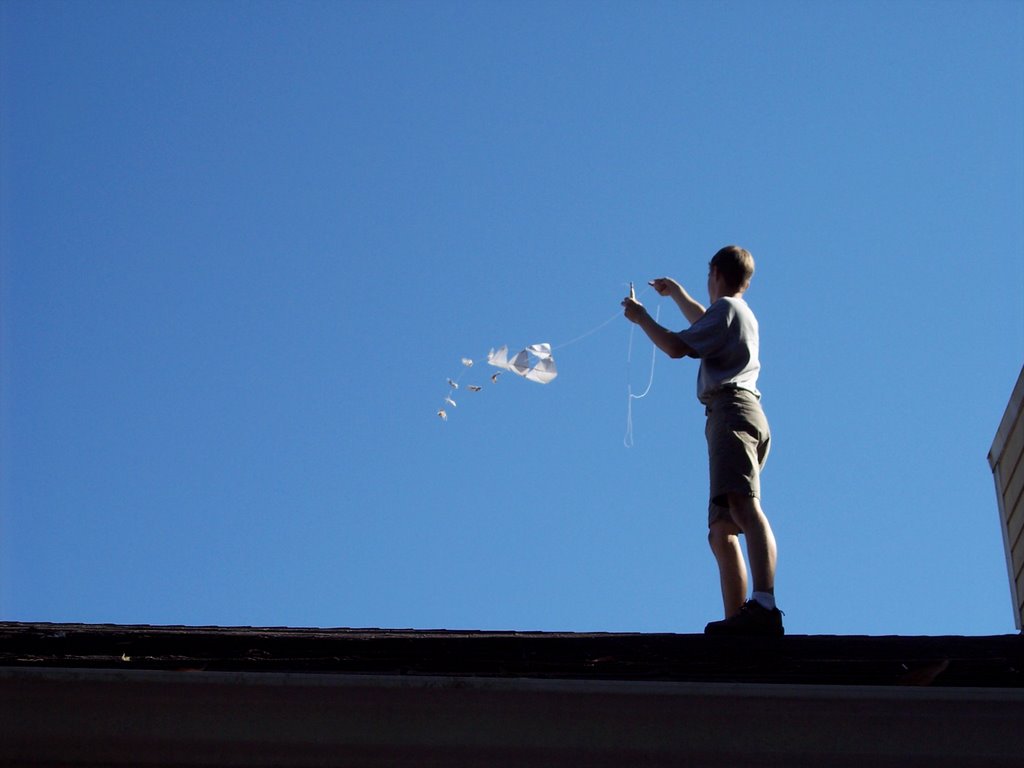
 Quite an original idea, don't you think?